|
FEATURED NEWS & EVENTS
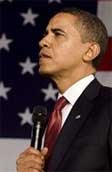
On Newsweek.com, EWI�s Director of Public Policy Andrew Nagorski
argues the President Obama will need plenty of help from world leaders
in tackling a host of current crises, everything from the economy to
Afghanistan and Iran. Russia�s Channel One TV also interviewed
Nagorski about Obama�s call for U.S.-Russian arms reductions. In
several related commentaries, EWI staffers and fellows offer their
recommendations on a broad range of issues confronting the new team in
Washington. More
|
| |
|
29-January-2009
A new EWI effort is shaping more effective international action to
stabilize Afghanistan and Pakistan. We are initiating a new security
dialogue with local, national, regional, and remote stakeholders to
devise and implement innovative, inclusive, and practical strategies
for peace in the region. (Photo: )
Meanwhile, EWI Vice President Greg Austin, writing on , argues that
military strategies in Afghanistan cannot succeed without direct
assistance to Afghanistan's farmers.
|
| |
|
04-February-2009
In a new online column, Going Global,
EWI Distinguished Fellow Mark Gerzon examines the claims of any number
of countries that they represent �the greatest nation on earth.�
His conclusion: a bit of humility could go a long way towards
developing cross-boundary leadership. Gerzon spearheads the , a network
of think tanks around the world that lives by the cross-boundary credo.
|
| |
|
Mahmoud Labadi, member of the Palestinian Authority, and Dror Ze'evi,
an Israeli professor, weigh in on the crisis in Gaza and its potential
solutions. Both commentators are residents of the region and have been
engaged with EWI since our Middle East Bridges project of 2003-2005. More
|
| |
|
EWI experts analyze potential solutions to the gas dispute between
Russia and Ukraine. EWI Deputy Director of Policy Innovation Jacqueline
Miller, who was quoted in the , argues that the conflict has adverse
consequences for all stakeholders. Meanwhile, Project Manager for
Energy Security Danila Bochkarev suggests in the that the EU can temper
the crisis with an economic approach that employs public-private
partnerships and is aware of political sensitivities. More
|
| |
|
06-January-2009
Foreign Policy magazine includes the EastWest Institute in its annual
ranking of the top 30 U.S. think tanks, listing it as number 21.
EWI�s 2008 budget of $9.2 million is smaller than many of the think
tanks listed higher. By comparison, the Brookings Institution has a
budget of $60.7 million and the Council on Foreign Relations $38.3
million. The report notes that the number of think tanks in the U.S.
has more than doubled since 1980, and the total now stands at 1,777.
|
| |
|
On December 8 and 9, EWI convened the third annual Trialogue21 meeting
of public and private sector leaders from China, Europe and the U.S. in
Washington, DC. The meeting generated essential strategies for the
three powers to address the global financial crisis. The meeting was an
essential step to ensure that these powers coordinate their responses
to this period of global change. More
|
| |
|
Leading figures from Afghanistan, including Dr. Zia Nezam, Afghan
ambassador to the EU and NATO, called for new strategies to address the
country's problems in an EWI meeting conducted under Chatham House
rules. Speakers recommended concrete next steps, including new command
and control arrangements for the wavering operations of the
International Security Assistance Force and honest evaluations of
effectiveness and efficiency of development funding. More
|
| |
|
Dmitry Rogozin, Russian Ambassador to NATO, challenged Western leaders
to work with Russia on new European security arrangements. Ideas
emerging from the meeting included: a proposal for a European summit
that includes political leaders and heads of all relevant regional
security and economic organizations; a new joint command structure of
relevant actors in Southeast Europe and the Caucasus; and a proposal
for renovation of the Treaty on Conventional Armed Forces in Europe. More
|
| |
|
Hundreds of media outlets around the world gave prominent play to the
recent EastWest Institute conference on Weapons of Mass Destruction,
which featured appeals for dramatic reductions in nuclear arsenals.
U.N. Secretary-General Ban Ki-moon delivered the keynote address, which
included a five-point proposal to eliminate nuclear weapons and an
unprecedented endorsement of an international convention against such
weapons More
|
| |
|
Despite difficult economic times, EWI friends and supporters came
together to meet the $500,000 goal for the first year of the 2008
Kathryn W. Davis Peace Initiatives Challenge Grant. In 2009, Kathryn
Davis will again match new and increased contributions up to $500,000. More
|
| |


 EWI, G-8 and World Customs Organization Lead Effort to Ensure Global Security from Terrorism. Register Today